Tuesday, September 2, 2014

  • Type: version 2 type B
  • Serial No: 130546
  • Manufactured: 1952
  • Manufacturer: Eho-Altissa, later VEB-Altissa Kamera Werk, Dresden, Germany
  • Shutter: Vebur
  • Shutter speeds: 1, 1/2, 1/5, 1/10, 1/25, 1/50, 1/100, 1/250
  • Lens: Meyer-Optik - Trioplan 1:2.9/50
  • Apertures: between 2.9 and 16
  • Lens No:1681093
  • Lens mount: fixed
  • Last CLA: 06/2011

I had bought this camera to have something which I could take with me on my motorbike and I didn’t mind to wreck. It was cheap. It was ugly on the pictures. I didn’t care about the look just wanted something simple and functioning. It cost less than 15 EUR.

Altix

As for the functionality, it provides with the bare minimum: small aperture and speed range, separate film winding and shutter cocking, no metering at all, you have to use a separate light meter for the exposition settings and a good guess-o-meter for the distances. Sounds not too handy, right?

Altix

The first thing I noticed when I finally got it was how small it was. And how seriously good looking. Far better than on the pictures. It was a real surprise for me.

Altix

I took it to the International Seiberer Bergpreis oldtimer race to have an old camera with me. It was sunny so I didn’t have to use my light meter just set f/16 and 1/100. I used range focusing to forecast the distance. Winded the film, cocked the shutter and shot. Modified the distance and shot again. And again and again. I fell in love with it for the first roll.

Altix

The rings and knobs are ergonomically designed so the handling feels absolutely natural. The viewfinder is surprisingly bright and useful. The lack of metering gives you speed. You have to calculate and set everything in advance so you won’t miss the right moment of exposition. It turned to be the ideal camera for the oldtimer race. I could shoot 2 or more pictures of a car or a motorcycle taking the curve. Here are some pictures of the first two rolls:

Goggomobil

Racers

Oldtimer

Oldtimer

And now some words on the Trioplan lens. It has 3 elements. It was designed to be an affordable alternative of the more sophisticated 5 elements lenses. Well, its designer made a terrific job. It renders sharp and clear images. I simply love it.

The small Altix quickly became one of my favorite cameras. It’s so ergonomic that it feels almost like a part of my body. It’s a great performer if you can prepare for the light conditions with the appropriate film speed. However, the absence of a rangefinder makes it very difficult to use if it comes to wider aperture settings.

  • Type: version 2 type B
  • Serial No: 130546
  • Manufactured: 1952
  • Manufacturer: Eho-Altissa, later VEB-Altissa Kamera Werk, Dresden, Germany
  • Shutter: Vebur
  • Shutter speeds: 1, 1/2, 1/5, 1/10, 1/25, 1/50, 1/100, 1/250
  • Lens: Meyer-Optik - Trioplan 1:2.9/50
  • Apertures: between 2.9 and 16
  • Lens No:1681093
  • Lens mount: fixed
  • Last CLA: 06/2011

I had bought this camera to have something which I could take with me on my motorbike and I didn’t mind to wreck. It was cheap. It was ugly on the pictures. I didn’t care about the look just wanted something simple and functioning. It cost less than 15 EUR.

Altix

As for the functionality, it provides with the bare minimum: small aperture and speed range, separate film winding and shutter cocking, no metering at all, you have to use a separate light meter for the exposition settings and a good guess-o-meter for the distances. Sounds not too handy, right?

Altix

The first thing I noticed when I finally got it was how small it was. And how seriously good looking. Far better than on the pictures. It was a real surprise for me.

Altix

I took it to the International Seiberer Bergpreis oldtimer race to have an old camera with me. It was sunny so I didn’t have to use my light meter just set f/16 and 1/100. I used range focusing to forecast the distance. Winded the film, cocked the shutter and shot. Modified the distance and shot again. And again and again. I fell in love with it for the first roll.

Altix

The rings and knobs are ergonomically designed so the handling feels absolutely natural. The viewfinder is surprisingly bright and useful. The lack of metering gives you speed. You have to calculate and set everything in advance so you won’t miss the right moment of exposition. It turned to be the ideal camera for the oldtimer race. I could shoot 2 or more pictures of a car or a motorcycle taking the curve. Here are some pictures of the first two rolls:

Goggomobil

Racers

Oldtimer

Oldtimer

And now some words on the Trioplan lens. It has 3 elements. It was designed to be an affordable alternative of the more sophisticated 5 elements lenses. Well, its designer made a terrific job. It renders sharp and clear images. I simply love it.

The small Altix quickly became one of my favorite cameras. It’s so ergonomic that it feels almost like a part of my body. It’s a great performer if you can prepare for the light conditions with the appropriate film speed. However, the absence of a rangefinder makes it very difficult to use if it comes to wider aperture settings.

  • Version: 4
  • Serial No: 504555
  • Manufactured: 1957
  • Manufacturer: Ihagee, Dresden, Germany
  • Shutter: “Guillotine-type” Exa specialty
  • Speeds: 1/150, 1/100, 1/50, 1/25, B
  • Lens: Meyer-Optik Görlitz Trioplan 1:2.9/50
  • Lens No:1996718
  • Apertures:2.9, 4, 5.6, 8. 11. 16. 22
  • Lens mount: Ihagee/Exakta/Exa bayonet
  • Last CLA: unknown
This is one of the best looking things ever made. No doubt about it. Look at this picture. Something you want to possess immediately, isn’t it? The good news is that you can buy one for less than EUR 50 on ebay.

Ihagee

This camera is the older brother of the Exa Ia, I’m going to compare with. People often call it Exa 0 to distinguish it from the latter I and II models.

The most striking difference is the look. The Ia was a nice camera but the 0 is simply beautiful. Sparkling metal everywhere, knobs and buttons, and this nice engraving on the front plate, all in all, this camera is a dangerous seducer.

Ihagee

The cheap feel of the Ia is not present when you hold the Exa 0 in your hand. It feels solid and precise. And it’s so damn good looking that you tend to forgive anything anyway. Even the sound of the shutter which is the same empty can noise as of the Exa Ia. But don’t hear, look!

There is charm everywhere on this camera. You can set the shutter speed with a stick for example. Isn’t it delightful? Of course it is.

Ihagee

Now let’s see the handling. This camera have a Trioplan lens which is great but it doesn’t include automatic aperture stop down so you have to set focus on maximum aperture and stop down manually before the exposition. Another issue is the finder. There is no focusing aid in the prism so using it is more difficult than the finder of the Ia which is brighter, have better loupe and gives us the comfort of a microprism. So the Ia is much easier and faster to use.

But the Exa 0 is a piece of gem and it even provides us with a “sport finder”. Or at least a hole that can be called this way. It cannot be used to focus or set anything but it’s so nice that it even exists.

Ihagee

Ihagee

Maybe beauty is not everything but it is almost. That’s why we love this camera. Finally some words about the lens. I love the Trioplans since I tried one on my Altix. They render beautifully, especially compared with the Domiplans. The Domiplans are boring, the images are unsharp and the colors need lots of digital post-processing not to be dead-grey. The best you can tell is that they are reliable and even the old ones are in generally good shape. But don’t go for it. There is a large lens selection for the Exas. Tessars for example. But the best choice can be the Trioplan. It is a mid-priced lens and this suits well for the cheap-SLR concept of the Exa family. Trioplan is the best on the mid-priced lens palette, standing out the same way as the Exa stands out from the other cameras of its price range. Or even more.

Some test shots in BW

Before

On

And here is the undeniable evidence of the superiority of the Trioplan lens. Look at them in full res. Look at the textures. And the bokeh. Crisp like nothing else. I love it.

Im

Im

Shes

Lookout

Wheat

  • Version: 4
  • Serial No: 504555
  • Manufactured: 1957
  • Manufacturer: Ihagee, Dresden, Germany
  • Shutter: “Guillotine-type” Exa specialty
  • Speeds: 1/150, 1/100, 1/50, 1/25, B
  • Lens: Meyer-Optik Görlitz Trioplan 1:2.9/50
  • Lens No:1996718
  • Apertures:2.9, 4, 5.6, 8. 11. 16. 22
  • Lens mount: Ihagee/Exakta/Exa bayonet
  • Last CLA: unknown
This is one of the best looking things ever made. No doubt about it. Look at this picture. Something you want to possess immediately, isn’t it? The good news is that you can buy one for less than EUR 50 on ebay.

Ihagee

This camera is the older brother of the Exa Ia, I’m going to compare with. People often call it Exa 0 to distinguish it from the latter I and II models.

The most striking difference is the look. The Ia was a nice camera but the 0 is simply beautiful. Sparkling metal everywhere, knobs and buttons, and this nice engraving on the front plate, all in all, this camera is a dangerous seducer.

Ihagee

The cheap feel of the Ia is not present when you hold the Exa 0 in your hand. It feels solid and precise. And it’s so damn good looking that you tend to forgive anything anyway. Even the sound of the shutter which is the same empty can noise as of the Exa Ia. But don’t hear, look!

There is charm everywhere on this camera. You can set the shutter speed with a stick for example. Isn’t it delightful? Of course it is.

Ihagee

Now let’s see the handling. This camera have a Trioplan lens which is great but it doesn’t include automatic aperture stop down so you have to set focus on maximum aperture and stop down manually before the exposition. Another issue is the finder. There is no focusing aid in the prism so using it is more difficult than the finder of the Ia which is brighter, have better loupe and gives us the comfort of a microprism. So the Ia is much easier and faster to use.

But the Exa 0 is a piece of gem and it even provides us with a “sport finder”. Or at least a hole that can be called this way. It cannot be used to focus or set anything but it’s so nice that it even exists.

Ihagee

Ihagee

Maybe beauty is not everything but it is almost. That’s why we love this camera. Finally some words about the lens. I love the Trioplans since I tried one on my Altix. They render beautifully, especially compared with the Domiplans. The Domiplans are boring, the images are unsharp and the colors need lots of digital post-processing not to be dead-grey. The best you can tell is that they are reliable and even the old ones are in generally good shape. But don’t go for it. There is a large lens selection for the Exas. Tessars for example. But the best choice can be the Trioplan. It is a mid-priced lens and this suits well for the cheap-SLR concept of the Exa family. Trioplan is the best on the mid-priced lens palette, standing out the same way as the Exa stands out from the other cameras of its price range. Or even more.

Some test shots in BW

Before

On

And here is the undeniable evidence of the superiority of the Trioplan lens. Look at them in full res. Look at the textures. And the bokeh. Crisp like nothing else. I love it.

Im

Im

Shes

Lookout

Wheat

Two

Great cameras have great stories behind them and this applies to the FED-2 which was named after Felix Edmundovich Dzerzhinsky alias Iron Felix. Iron Felix wasn’t a cartoon superhero but he was the founder of the fearful Bolshevik secret police called Vecheka, well-known from its brutality. It was the ancestor of the latter KGB. He got the assignment directly from Vladimir Ilyich Lenin.


F.E. Dzerzhinsky

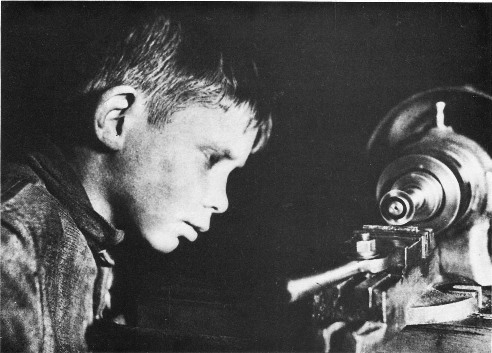
Felix Edmundovich Dzerzhinsky wasn’t an optical engineer. He wasn’t a photographer either. But he must have been quite influential because they named six towns after him, and, most importantly, a labor commune in Kharkov, Ukraine. This rehabilitation commune of abandoned youths (or prison of young criminals, mostly 13-17 year old boys and girls, as the rumor says) was led by the reputed Soviet pedagogue, director Anton Semyonovich Makarenko, famous after his theory of collective discipline. Here they started to manufacture the Soviet Union’s first 35mm camera, the FED, during Stalin’s push for the industrial and economic transformation of Russia.


Young communards working in the F. E. Dzerzhinsky Commune - 1934

The FED was based on the Leica II(D) - the Russians bought the license from the German company for the camera body, the collapsible Elmar lens and the 35mm Leica film cassette in 1932. But they didn’t just copy it, they made some developments as well. Soon, the FED-2 was born. It wasn’t a simple Leica replica anymore.

FED-2


  • Type: B2
  • Serial No: 153914
  • Manufactured: 1956 - 1958
  • Manufacturer: Felix Edmundovich Dzerzhinsky Labour Commune, Kharkov, Ukraine, SSSR
  • Shutter: curtain
  • Speeds: 1/25, 1/50, 1/100, 1/250, 1/500 and B
  • Lens: FED 1:3,5 F=50mm
  • Apertures: 3,5 - 16 without stops
  • Lens No: 280375
  • Lens mount: M39
  • Last CLA: 06/2010

The FED-2 got a large, Contax-like 67mm coupled rangefinder and a Contax-like film loading mechanism while keeping the ergonomic Leica design and the Leica shutter. The best from both world, one may say. The FED-2 is therefore a very comfortable and surprisingly usable camera.

FED-2

I love the way you have to cock the curtain shutter: you can feel the curtain rolling to the spool. The exposition feels a bit clumsy as the curtains roll down but in fact, the shutter is quite precise. The whole process is simply lovely.

FED-2

Despite the compact look, the FED-2 is heavy and solid as a rock so you can use it for self-defending purposes in case of need. The knobs rotate a bit rough, you can feel that it’s a Russian piece of machinery of the not-too-precise-but-surviving-everything kind.

FED-2

FED-2

The camera design is so simple that it’s almost impossible to wreck and cheap to get repaired. They made more than one million FED-2s so it’s not too difficult to find spare parts. However, parts of different cameras are not necessarily interchangeable from two reasons: firstly, there were about 30 more or less different types of it, secondly, they were made by hand so the sizes and the location of screw holes may differ a little.

Rest

The collapsible FED lens is not the sharpest one I ever had, but it’s a big fun to use it. First, you have to pull it out of the camera body, then you have to twist it while pulling to lock it. Don’t forget to push it back a little to check you locked it properly otherwise you can get an out of focus image like this:

Landscape

You can call it artistic anyway.

Now let’s see the other one:

FED-2

  • Type: D6
  • Serial No: 2343868
  • Manufactured: 1959 - 1968
  • Manufacturer: Felix Edmundovich Dzerzhinsky Labour Commune, Kharkov, Ukraine, SSSR
  • Shutter: curtain
  • Speeds: 1/30, 1/60, 1/125, 1/250, 1/500 and B
  • Lens: FED I-26m 2,8/52
  • Apertures: 2.8 - 22 without stops
  • Lens No: 1581284
  • Lens mount: M39
  • Last CLA: 06/2010

I ‘ve got this camera from a girl working at the photo lab when I took a few rolls of film there for development. She was enthusiastic about digital photography and didn’t understand why I used a film camera. This FED-2 was her grandfather’s camera but she never used it and wanted it to be in good hands so she handed it over to me. I’ve got it CLA-d and promised to take care of it. He made me promise to show the first roll taken with it but I couldn’t find her at the shop anymore despite that I tried it several times.

FED-2

This later type FED-2 feels to be exactly as well-balanced in the hand as the older one, with the same vulcanite exterior which gives a good grip. The main difference is that the knobs work more easily and more precisely. There is a minor change in shutter speeds which I wouldn’t call an enhancement: 25, 50 and 100 was replaced by 30, 60 and 125. The shutter itself is a newer design: it’s not as vulnerable to improper handling as the older ones were.

FED-2

The pretty collapsible FED lens was replaced by a definitely better performing but less charming Industar 26 labeled as FED I-26m with a strange 52mm focal lenght. It is sharper and renders definitely better pictures than its collapsible brother.

Bales

The

Elisabeth

St.

Here are two really important warnings if you want to use a FED:
  1. Always cock the shutter before setting the speed. Never set the speed first or you damage the shutter permanently. (Some later types are not vulnerable to this but you’d better not count on it.)
  2. Never turn the lens to the sun. It will burn holes into the shutter curtain. Use lens cap every time.

Two

Great cameras have great stories behind them and this applies to the FED-2 which was named after Felix Edmundovich Dzerzhinsky alias Iron Felix. Iron Felix wasn’t a cartoon superhero but he was the founder of the fearful Bolshevik secret police called Vecheka, well-known from its brutality. It was the ancestor of the latter KGB. He got the assignment directly from Vladimir Ilyich Lenin.


F.E. Dzerzhinsky

Felix Edmundovich Dzerzhinsky wasn’t an optical engineer. He wasn’t a photographer either. But he must have been quite influential because they named six towns after him, and, most importantly, a labor commune in Kharkov, Ukraine. This rehabilitation commune of abandoned youths (or prison of young criminals, mostly 13-17 year old boys and girls, as the rumor says) was led by the reputed Soviet pedagogue, director Anton Semyonovich Makarenko, famous after his theory of collective discipline. Here they started to manufacture the Soviet Union’s first 35mm camera, the FED, during Stalin’s push for the industrial and economic transformation of Russia.


Young communards working in the F. E. Dzerzhinsky Commune - 1934

The FED was based on the Leica II(D) - the Russians bought the license from the German company for the camera body, the collapsible Elmar lens and the 35mm Leica film cassette in 1932. But they didn’t just copy it, they made some developments as well. Soon, the FED-2 was born. It wasn’t a simple Leica replica anymore.

FED-2


  • Type: B2
  • Serial No: 153914
  • Manufactured: 1956 - 1958
  • Manufacturer: Felix Edmundovich Dzerzhinsky Labour Commune, Kharkov, Ukraine, SSSR
  • Shutter: curtain
  • Speeds: 1/25, 1/50, 1/100, 1/250, 1/500 and B
  • Lens: FED 1:3,5 F=50mm
  • Apertures: 3,5 - 16 without stops
  • Lens No: 280375
  • Lens mount: M39
  • Last CLA: 06/2010

The FED-2 got a large, Contax-like 67mm coupled rangefinder and a Contax-like film loading mechanism while keeping the ergonomic Leica design and the Leica shutter. The best from both world, one may say. The FED-2 is therefore a very comfortable and surprisingly usable camera.

FED-2

I love the way you have to cock the curtain shutter: you can feel the curtain rolling to the spool. The exposition feels a bit clumsy as the curtains roll down but in fact, the shutter is quite precise. The whole process is simply lovely.

FED-2

Despite the compact look, the FED-2 is heavy and solid as a rock so you can use it for self-defending purposes in case of need. The knobs rotate a bit rough, you can feel that it’s a Russian piece of machinery of the not-too-precise-but-surviving-everything kind.

FED-2

FED-2

The camera design is so simple that it’s almost impossible to wreck and cheap to get repaired. They made more than one million FED-2s so it’s not too difficult to find spare parts. However, parts of different cameras are not necessarily interchangeable from two reasons: firstly, there were about 30 more or less different types of it, secondly, they were made by hand so the sizes and the location of screw holes may differ a little.

Rest

The collapsible FED lens is not the sharpest one I ever had, but it’s a big fun to use it. First, you have to pull it out of the camera body, then you have to twist it while pulling to lock it. Don’t forget to push it back a little to check you locked it properly otherwise you can get an out of focus image like this:

Landscape

You can call it artistic anyway.

Now let’s see the other one:

FED-2

  • Type: D6
  • Serial No: 2343868
  • Manufactured: 1959 - 1968
  • Manufacturer: Felix Edmundovich Dzerzhinsky Labour Commune, Kharkov, Ukraine, SSSR
  • Shutter: curtain
  • Speeds: 1/30, 1/60, 1/125, 1/250, 1/500 and B
  • Lens: FED I-26m 2,8/52
  • Apertures: 2.8 - 22 without stops
  • Lens No: 1581284
  • Lens mount: M39
  • Last CLA: 06/2010

I ‘ve got this camera from a girl working at the photo lab when I took a few rolls of film there for development. She was enthusiastic about digital photography and didn’t understand why I used a film camera. This FED-2 was her grandfather’s camera but she never used it and wanted it to be in good hands so she handed it over to me. I’ve got it CLA-d and promised to take care of it. He made me promise to show the first roll taken with it but I couldn’t find her at the shop anymore despite that I tried it several times.

FED-2

This later type FED-2 feels to be exactly as well-balanced in the hand as the older one, with the same vulcanite exterior which gives a good grip. The main difference is that the knobs work more easily and more precisely. There is a minor change in shutter speeds which I wouldn’t call an enhancement: 25, 50 and 100 was replaced by 30, 60 and 125. The shutter itself is a newer design: it’s not as vulnerable to improper handling as the older ones were.

FED-2

The pretty collapsible FED lens was replaced by a definitely better performing but less charming Industar 26 labeled as FED I-26m with a strange 52mm focal lenght. It is sharper and renders definitely better pictures than its collapsible brother.

Bales

The

Elisabeth

St.

Here are two really important warnings if you want to use a FED:
  1. Always cock the shutter before setting the speed. Never set the speed first or you damage the shutter permanently. (Some later types are not vulnerable to this but you’d better not count on it.)
  2. Never turn the lens to the sun. It will burn holes into the shutter curtain. Use lens cap every time.

Monday, September 1, 2014

  • Type: Dollina II
  • Serial No: 40036
  • Manufactured: between end of 1936 and 1938
  • Manufacturer: Certo 
  • Shutter: Compur-Rapid metal leaf shutter
  • Shutter speeds: T, B, 1, 1/2, 1/5, 1/10, 1/25, 1/50, 1/100, 1/250, 1/500
  • Lens: uncoated Carl Zeiss Jena Tessar 1:2.8 f=5cm
  • Aperture: 2.8, 4, 5.6, 8, 11, 16, 22
  • Lens Serial No: 2276719
  • Lens mount: -
  • Last CLA: 01/2012
This camera is the elder brother of the Super Dollina II. Charming and comfortless as we can expect from this family. Interestingly, its a bit more handy than the younger brother because the aperture numbers are at least clearly visible in the front plate of the lens. Setting it with that ugly peg under the lens is still challenging, though, because you cannot easily access it from the front cover which opens under the lens. 

Certo

Certo

Certo

The Dollina II is a preWWII rangefinder camera which was manufactured only for almost 2 years, from end of 1936 until 1938 when the Dollina III took its place on the top of the 35mm folder palette of Certo. The previous model Dollina I was a simple viewfinder construction with the focus knob on the top plate. The Dollina II looks like if somebody have fastened a separate split-image rangefinder on top of a Dollina I. And the truth is not so far from it. Have a closer look. Its basically a separate rangefinder unit screwed onto the camera.

Certo

You can barely see the frame counter window because the rangefinder house partly covers it. This rangefinder was surely not an integrated part of the original camera design: it was added on later.

Certo

The rangefinder is a simple two mirror split-image device but despite how it looks like, its actually coupled to the focusing. Focusing and framing is basically the same as with the Super Dollina II: you have to do them through two separate pinholes. Or pinhole tubes - if such a word existed.

The viewfinder is a simple tube but be aware: it is not necessarily precise. Mine is a bit misaligned upwards for example. But lets leave this rangefinder/viewfinder topic for now and discuss that brilliant little Tessar on the front.

Certo

50mm, f/2.8, as you can expect. Its uncoated so it renders real vintage-looking pictures withfoggy parts and glow around light sources and bright surfaces. The in-focus area is sharp and stern, the background gets a bit creamy. All in all, it takes very pleasant photos. The lens is not color corrected so I didnt try it with color film, just plain old BW.

The shutter is the famous Compur-Rapid with times up to 1/500 sec. which is usually enough for everything. No complaints about it.

Certo

In theory, the Certo Dollina II meets the requirements of a capable rangefinder: 1/500s shutter speed and a sharp fast lens. Its a rarity  and on top of that, a beautiful camera with metal and glass everywhere. Unfortunately, the misaligned viewfinder, the pinhole-like rangefinder and the spartan, anti-ergonomic operation challenges the enthusiasm of the photographer. But the result speaks for itself: you can take real vintage photos with it in great quality.

Hercules

Warming

Untitled

Untitled

Untitled

  • Type: Dollina II
  • Serial No: 40036
  • Manufactured: between end of 1936 and 1938
  • Manufacturer: Certo 
  • Shutter: Compur-Rapid metal leaf shutter
  • Shutter speeds: T, B, 1, 1/2, 1/5, 1/10, 1/25, 1/50, 1/100, 1/250, 1/500
  • Lens: uncoated Carl Zeiss Jena Tessar 1:2.8 f=5cm
  • Aperture: 2.8, 4, 5.6, 8, 11, 16, 22
  • Lens Serial No: 2276719
  • Lens mount: -
  • Last CLA: 01/2012
This camera is the elder brother of the Super Dollina II. Charming and comfortless as we can expect from this family. Interestingly, its a bit more handy than the younger brother because the aperture numbers are at least clearly visible in the front plate of the lens. Setting it with that ugly peg under the lens is still challenging, though, because you cannot easily access it from the front cover which opens under the lens. 

Certo

Certo

Certo

The Dollina II is a preWWII rangefinder camera which was manufactured only for almost 2 years, from end of 1936 until 1938 when the Dollina III took its place on the top of the 35mm folder palette of Certo. The previous model Dollina I was a simple viewfinder construction with the focus knob on the top plate. The Dollina II looks like if somebody have fastened a separate split-image rangefinder on top of a Dollina I. And the truth is not so far from it. Have a closer look. Its basically a separate rangefinder unit screwed onto the camera.

Certo

You can barely see the frame counter window because the rangefinder house partly covers it. This rangefinder was surely not an integrated part of the original camera design: it was added on later.

Certo

The rangefinder is a simple two mirror split-image device but despite how it looks like, its actually coupled to the focusing. Focusing and framing is basically the same as with the Super Dollina II: you have to do them through two separate pinholes. Or pinhole tubes - if such a word existed.

The viewfinder is a simple tube but be aware: it is not necessarily precise. Mine is a bit misaligned upwards for example. But lets leave this rangefinder/viewfinder topic for now and discuss that brilliant little Tessar on the front.

Certo

50mm, f/2.8, as you can expect. Its uncoated so it renders real vintage-looking pictures withfoggy parts and glow around light sources and bright surfaces. The in-focus area is sharp and stern, the background gets a bit creamy. All in all, it takes very pleasant photos. The lens is not color corrected so I didnt try it with color film, just plain old BW.

The shutter is the famous Compur-Rapid with times up to 1/500 sec. which is usually enough for everything. No complaints about it.

Certo

In theory, the Certo Dollina II meets the requirements of a capable rangefinder: 1/500s shutter speed and a sharp fast lens. Its a rarity  and on top of that, a beautiful camera with metal and glass everywhere. Unfortunately, the misaligned viewfinder, the pinhole-like rangefinder and the spartan, anti-ergonomic operation challenges the enthusiasm of the photographer. But the result speaks for itself: you can take real vintage photos with it in great quality.

Hercules

Warming

Untitled

Untitled

Untitled